Tag: Fediverse
Moved to graz.social
My Mastodon account has moved: I’m now
@m1ch@graz.social. The old account,
@mightymich@mastodon.social, points there, and Mastodon’s account migration
brought my followers along, so if you followed me before you don’t need to
do anything. – TBH: If I knew how easy this step would be, I’d done it long ago.

Why
graz.social is a Mastodon server for Graz and the surrounding area, run by the association graz.social – Verein zur Förderung ethischer Digitalkultur (info.graz.social). I’m part of its admin team, and now my own account lives there too: on a server I help look after, in the city I live in.
Tag: Graz.social
Moved to graz.social
My Mastodon account has moved: I’m now
@m1ch@graz.social. The old account,
@mightymich@mastodon.social, points there, and Mastodon’s account migration
brought my followers along, so if you followed me before you don’t need to
do anything. – TBH: If I knew how easy this step would be, I’d done it long ago.
Why
graz.social is a Mastodon server for Graz and the surrounding area, run by the association graz.social – Verein zur Förderung ethischer Digitalkultur (info.graz.social). I’m part of its admin team, and now my own account lives there too: on a server I help look after, in the city I live in.
Tag: Mastodon
Moved to graz.social
My Mastodon account has moved: I’m now
@m1ch@graz.social. The old account,
@mightymich@mastodon.social, points there, and Mastodon’s account migration
brought my followers along, so if you followed me before you don’t need to
do anything. – TBH: If I knew how easy this step would be, I’d done it long ago.
Why
graz.social is a Mastodon server for Graz and the surrounding area, run by the association graz.social – Verein zur Förderung ethischer Digitalkultur (info.graz.social). I’m part of its admin team, and now my own account lives there too: on a server I help look after, in the city I live in.
Tag: Bootc
Coordinated Reboots for bootc Hosts
TL;DR – My bootc hosts stage new images every hour, but nothing rebooted them into those images. Now a small timer on each host checks a time window, its own health and its neighbours, takes a lock from a ~200-line Python FleetLock server, and only then reboots. No Kubernetes, no etcd, and protocol-compatible with the Fedora CoreOS tooling in case I outgrow it.
In how I tweak my base image I
described how I replaced bootc-fetch-apply-updates.timer with my own
bootc-fetch.timer: every hour bootc update pulls the newest image and
stages it, but doesn’t reboot. I ended that post with “the actual reboot is a
separate step I control manually or via another timer”. This post is about
that missing step.
Conditional bootc build
Running image builds on a schedule makes sense for security – you want your bootc images to pick up the latest Fedora updates automatically. But scheduling a daily build that rebuilds every image every day, even when nothing upstream changed, wastes runner time and fills the registry with identical layers.
This post covers how I added upstream change detection to my Forgejo CI pipelines for gorgeOS, so that scheduled builds are truly no-ops when the upstream image hasn’t moved.
Bootc Matrix Build
Running a Fedora-based bootc image stack means tracking multiple Fedora releases in parallel. Instead of duplicating every job in the workflow, I wired up the matrix strategy in Forgejo Actions to build F43 and F44 from a single job definition.
The Problem With Hardcoded Versions
Before, every Containerfile had a hardcoded base image:
FROM git.m1ch.eu/oci/c-os:base-43
Supporting F44 would have meant either duplicating the whole workflow or a manual find-and-replace for every release. Neither scales.
gorgeOS-Cloud
In the last post I walked through the base image that every one of my servers shares. This time I want to look at the first layer on top of it: the cloud image, which adds everything a virtual machine running in a hypervisor environment needs.
The full source is in my gorge.os repository.
Layered images
One of the things I really like about BootC is that you can layer images just like you layer application containers. The cloud image simply starts from the base:
How I tweak my bootc base image
In the last post I explained why I decided to switch to BootC for all my servers. This time I want to walk through what I actually put into my base image - the packages, the config files, and the custom services that make every host feel like home.
The full source is in my gorge.os repository.
The Containerfile structure
Before getting into what’s in the image, I want to explain how I put things into it. The Containerfile is split into three stages: package management, file placement, and service activation.
The motivation to use BootC
I have a fair amount of servers that I’m (co-)responsible for. To make my life easier I tried serveral managent tools to do the common tasks for all servers as smooth as possible.
The two tools I mainly use at the moment are ansible and cloud-init.
Cloud-init is a great tool to spin up a new server, or to resore an existing one.
ansible is great to do common tasks, like updating servers, installing packages to multiple hosts, but when it comes to thinks like adding a systemd-service to just a view hosts, it never felt natural to me.
Tag: Fedora
Coordinated Reboots for bootc Hosts
TL;DR – My bootc hosts stage new images every hour, but nothing rebooted them into those images. Now a small timer on each host checks a time window, its own health and its neighbours, takes a lock from a ~200-line Python FleetLock server, and only then reboots. No Kubernetes, no etcd, and protocol-compatible with the Fedora CoreOS tooling in case I outgrow it.
In how I tweak my base image I
described how I replaced bootc-fetch-apply-updates.timer with my own
bootc-fetch.timer: every hour bootc update pulls the newest image and
stages it, but doesn’t reboot. I ended that post with “the actual reboot is a
separate step I control manually or via another timer”. This post is about
that missing step.
Conditional bootc build
Running image builds on a schedule makes sense for security – you want your bootc images to pick up the latest Fedora updates automatically. But scheduling a daily build that rebuilds every image every day, even when nothing upstream changed, wastes runner time and fills the registry with identical layers.
This post covers how I added upstream change detection to my Forgejo CI pipelines for gorgeOS, so that scheduled builds are truly no-ops when the upstream image hasn’t moved.
Bootc Matrix Build
Running a Fedora-based bootc image stack means tracking multiple Fedora releases in parallel. Instead of duplicating every job in the workflow, I wired up the matrix strategy in Forgejo Actions to build F43 and F44 from a single job definition.
The Problem With Hardcoded Versions
Before, every Containerfile had a hardcoded base image:
FROM git.m1ch.eu/oci/c-os:base-43
Supporting F44 would have meant either duplicating the whole workflow or a manual find-and-replace for every release. Neither scales.
gorgeOS-Cloud
In the last post I walked through the base image that every one of my servers shares. This time I want to look at the first layer on top of it: the cloud image, which adds everything a virtual machine running in a hypervisor environment needs.
The full source is in my gorge.os repository.
Layered images
One of the things I really like about BootC is that you can layer images just like you layer application containers. The cloud image simply starts from the base:
How I tweak my bootc base image
In the last post I explained why I decided to switch to BootC for all my servers. This time I want to walk through what I actually put into my base image - the packages, the config files, and the custom services that make every host feel like home.
The full source is in my gorge.os repository.
The Containerfile structure
Before getting into what’s in the image, I want to explain how I put things into it. The Containerfile is split into three stages: package management, file placement, and service activation.
The motivation to use BootC
I have a fair amount of servers that I’m (co-)responsible for. To make my life easier I tried serveral managent tools to do the common tasks for all servers as smooth as possible.
The two tools I mainly use at the moment are ansible and cloud-init.
Cloud-init is a great tool to spin up a new server, or to resore an existing one.
ansible is great to do common tasks, like updating servers, installing packages to multiple hosts, but when it comes to thinks like adding a systemd-service to just a view hosts, it never felt natural to me.
Tag: Linux
Coordinated Reboots for bootc Hosts
TL;DR – My bootc hosts stage new images every hour, but nothing rebooted them into those images. Now a small timer on each host checks a time window, its own health and its neighbours, takes a lock from a ~200-line Python FleetLock server, and only then reboots. No Kubernetes, no etcd, and protocol-compatible with the Fedora CoreOS tooling in case I outgrow it.
In how I tweak my base image I
described how I replaced bootc-fetch-apply-updates.timer with my own
bootc-fetch.timer: every hour bootc update pulls the newest image and
stages it, but doesn’t reboot. I ended that post with “the actual reboot is a
separate step I control manually or via another timer”. This post is about
that missing step.
AI Agents in My Hosting Workflow
My homelab is mostly text: Docker Swarm compose files, bootc Containerfiles, Forgejo workflows, a few Ansible playbooks and this Hugo blog. All of it lives in git, and for years the workflow has been the same: edit in an editor, render, deploy, check the logs, repeat.
Over the last months two coding agents moved into that loop: opencode and Claude Code. This post covers how I set them up, what they do for me, and where I still keep my hands on the wheel.
Why I Run My Models Locally
Every prompt you send to a hosted LLM leaves your network. That includes the text you type, the files you attach, and whatever context your tools decide to pack around it. For a quick question about a regex that doesn’t matter. For your mailbox, your customers’ tickets or your company wiki, it matters a lot.
That is the main reason I run most of my models on my own hardware with Ollama. This post covers why, and where these models are useful in a self-hosted setup.
Conditional bootc build
Running image builds on a schedule makes sense for security – you want your bootc images to pick up the latest Fedora updates automatically. But scheduling a daily build that rebuilds every image every day, even when nothing upstream changed, wastes runner time and fills the registry with identical layers.
This post covers how I added upstream change detection to my Forgejo CI pipelines for gorgeOS, so that scheduled builds are truly no-ops when the upstream image hasn’t moved.
Bootc Matrix Build
Running a Fedora-based bootc image stack means tracking multiple Fedora releases in parallel. Instead of duplicating every job in the workflow, I wired up the matrix strategy in Forgejo Actions to build F43 and F44 from a single job definition.
The Problem With Hardcoded Versions
Before, every Containerfile had a hardcoded base image:
FROM git.m1ch.eu/oci/c-os:base-43
Supporting F44 would have meant either duplicating the whole workflow or a manual find-and-replace for every release. Neither scales.
Using SSH Config `Match exec` to Route Hostnames Dynamically
Why bother with a fancy Match block?
When you SSH into a fleet of servers that share a naming scheme, you usually end up copying-pasting the same options over and over. A Match block that tests the host name and then tweaks the connection parameters lets you:
- Keep a single config file that works for every member of the group.
- Automate proxying or port-translation without having to write a wrapper script.
The example below demonstrates the trick.
Glusterfs down
This morning I woke up and the radio was not playing. I soon figured out, that my DNS, AdGuard, was for some reason down.
I started with the debugging, even before I had breakfast. Not evan a coffee!
The docker-container for AdGuard was running and reported no error. So I dug deeper and deeper, just to find out, that several containers showed strange behavior. For example did Traefik had som error that it could not find the middlewares, that where configured via environment variables.
Tag: Selfhost
Coordinated Reboots for bootc Hosts
TL;DR – My bootc hosts stage new images every hour, but nothing rebooted them into those images. Now a small timer on each host checks a time window, its own health and its neighbours, takes a lock from a ~200-line Python FleetLock server, and only then reboots. No Kubernetes, no etcd, and protocol-compatible with the Fedora CoreOS tooling in case I outgrow it.
In how I tweak my base image I
described how I replaced bootc-fetch-apply-updates.timer with my own
bootc-fetch.timer: every hour bootc update pulls the newest image and
stages it, but doesn’t reboot. I ended that post with “the actual reboot is a
separate step I control manually or via another timer”. This post is about
that missing step.
No Assignment, No Code: Planning with a Coding Agent in OpenProject
TL;DR – I plan my side project with a coding agent in OpenProject instead of a chat window. I write user stories (what and why); the agent, working as its own least-privilege user, turns them into features and tasks with specs (how) and hands them back for review. It only writes code for items assigned to it, and only when I ask. It works, it costs some ceremony, and the MCP tooling still has rough edges.
AI Agents in My Hosting Workflow
My homelab is mostly text: Docker Swarm compose files, bootc Containerfiles, Forgejo workflows, a few Ansible playbooks and this Hugo blog. All of it lives in git, and for years the workflow has been the same: edit in an editor, render, deploy, check the logs, repeat.
Over the last months two coding agents moved into that loop: opencode and Claude Code. This post covers how I set them up, what they do for me, and where I still keep my hands on the wheel.
Why I Run My Models Locally
Every prompt you send to a hosted LLM leaves your network. That includes the text you type, the files you attach, and whatever context your tools decide to pack around it. For a quick question about a regex that doesn’t matter. For your mailbox, your customers’ tickets or your company wiki, it matters a lot.
That is the main reason I run most of my models on my own hardware with Ollama. This post covers why, and where these models are useful in a self-hosted setup.
Conditional bootc build
Running image builds on a schedule makes sense for security – you want your bootc images to pick up the latest Fedora updates automatically. But scheduling a daily build that rebuilds every image every day, even when nothing upstream changed, wastes runner time and fills the registry with identical layers.
This post covers how I added upstream change detection to my Forgejo CI pipelines for gorgeOS, so that scheduled builds are truly no-ops when the upstream image hasn’t moved.
Bootc Matrix Build
Running a Fedora-based bootc image stack means tracking multiple Fedora releases in parallel. Instead of duplicating every job in the workflow, I wired up the matrix strategy in Forgejo Actions to build F43 and F44 from a single job definition.
The Problem With Hardcoded Versions
Before, every Containerfile had a hardcoded base image:
FROM git.m1ch.eu/oci/c-os:base-43
Supporting F44 would have meant either duplicating the whole workflow or a manual find-and-replace for every release. Neither scales.
Tag: Systemd
Coordinated Reboots for bootc Hosts
TL;DR – My bootc hosts stage new images every hour, but nothing rebooted them into those images. Now a small timer on each host checks a time window, its own health and its neighbours, takes a lock from a ~200-line Python FleetLock server, and only then reboots. No Kubernetes, no etcd, and protocol-compatible with the Fedora CoreOS tooling in case I outgrow it.
In how I tweak my base image I
described how I replaced bootc-fetch-apply-updates.timer with my own
bootc-fetch.timer: every hour bootc update pulls the newest image and
stages it, but doesn’t reboot. I ended that post with “the actual reboot is a
separate step I control manually or via another timer”. This post is about
that missing step.
Tag: Agentic-Coding
No Assignment, No Code: Planning with a Coding Agent in OpenProject
TL;DR – I plan my side project with a coding agent in OpenProject instead of a chat window. I write user stories (what and why); the agent, working as its own least-privilege user, turns them into features and tasks with specs (how) and hands them back for review. It only writes code for items assigned to it, and only when I ask. It works, it costs some ceremony, and the MCP tooling still has rough edges.
Tag: Ai
No Assignment, No Code: Planning with a Coding Agent in OpenProject
TL;DR – I plan my side project with a coding agent in OpenProject instead of a chat window. I write user stories (what and why); the agent, working as its own least-privilege user, turns them into features and tasks with specs (how) and hands them back for review. It only writes code for items assigned to it, and only when I ask. It works, it costs some ceremony, and the MCP tooling still has rough edges.
AI Agents in My Hosting Workflow
My homelab is mostly text: Docker Swarm compose files, bootc Containerfiles, Forgejo workflows, a few Ansible playbooks and this Hugo blog. All of it lives in git, and for years the workflow has been the same: edit in an editor, render, deploy, check the logs, repeat.
Over the last months two coding agents moved into that loop: opencode and Claude Code. This post covers how I set them up, what they do for me, and where I still keep my hands on the wheel.
Why I Run My Models Locally
Every prompt you send to a hosted LLM leaves your network. That includes the text you type, the files you attach, and whatever context your tools decide to pack around it. For a quick question about a regex that doesn’t matter. For your mailbox, your customers’ tickets or your company wiki, it matters a lot.
That is the main reason I run most of my models on my own hardware with Ollama. This post covers why, and where these models are useful in a self-hosted setup.
Tag: Boxgent
No Assignment, No Code: Planning with a Coding Agent in OpenProject
TL;DR – I plan my side project with a coding agent in OpenProject instead of a chat window. I write user stories (what and why); the agent, working as its own least-privilege user, turns them into features and tasks with specs (how) and hands them back for review. It only writes code for items assigned to it, and only when I ask. It works, it costs some ceremony, and the MCP tooling still has rough edges.
Tag: Openproject
No Assignment, No Code: Planning with a Coding Agent in OpenProject
TL;DR – I plan my side project with a coding agent in OpenProject instead of a chat window. I write user stories (what and why); the agent, working as its own least-privilege user, turns them into features and tasks with specs (how) and hands them back for review. It only writes code for items assigned to it, and only when I ask. It works, it costs some ceremony, and the MCP tooling still has rough edges.
Tag: Claude-Code
AI Agents in My Hosting Workflow
My homelab is mostly text: Docker Swarm compose files, bootc Containerfiles, Forgejo workflows, a few Ansible playbooks and this Hugo blog. All of it lives in git, and for years the workflow has been the same: edit in an editor, render, deploy, check the logs, repeat.
Over the last months two coding agents moved into that loop: opencode and Claude Code. This post covers how I set them up, what they do for me, and where I still keep my hands on the wheel.
Tag: Docker
AI Agents in My Hosting Workflow
My homelab is mostly text: Docker Swarm compose files, bootc Containerfiles, Forgejo workflows, a few Ansible playbooks and this Hugo blog. All of it lives in git, and for years the workflow has been the same: edit in an editor, render, deploy, check the logs, repeat.
Over the last months two coding agents moved into that loop: opencode and Claude Code. This post covers how I set them up, what they do for me, and where I still keep my hands on the wheel.
Why I Run My Models Locally
Every prompt you send to a hosted LLM leaves your network. That includes the text you type, the files you attach, and whatever context your tools decide to pack around it. For a quick question about a regex that doesn’t matter. For your mailbox, your customers’ tickets or your company wiki, it matters a lot.
That is the main reason I run most of my models on my own hardware with Ollama. This post covers why, and where these models are useful in a self-hosted setup.
Tag: Opencode
AI Agents in My Hosting Workflow
My homelab is mostly text: Docker Swarm compose files, bootc Containerfiles, Forgejo workflows, a few Ansible playbooks and this Hugo blog. All of it lives in git, and for years the workflow has been the same: edit in an editor, render, deploy, check the logs, repeat.
Over the last months two coding agents moved into that loop: opencode and Claude Code. This post covers how I set them up, what they do for me, and where I still keep my hands on the wheel.
Tag: Ollama
Why I Run My Models Locally
Every prompt you send to a hosted LLM leaves your network. That includes the text you type, the files you attach, and whatever context your tools decide to pack around it. For a quick question about a regex that doesn’t matter. For your mailbox, your customers’ tickets or your company wiki, it matters a lot.
That is the main reason I run most of my models on my own hardware with Ollama. This post covers why, and where these models are useful in a self-hosted setup.
Tag: Privacy
Why I Run My Models Locally
Every prompt you send to a hosted LLM leaves your network. That includes the text you type, the files you attach, and whatever context your tools decide to pack around it. For a quick question about a regex that doesn’t matter. For your mailbox, your customers’ tickets or your company wiki, it matters a lot.
That is the main reason I run most of my models on my own hardware with Ollama. This post covers why, and where these models are useful in a self-hosted setup.
Tag: Forgejo
Conditional bootc build
Running image builds on a schedule makes sense for security – you want your bootc images to pick up the latest Fedora updates automatically. But scheduling a daily build that rebuilds every image every day, even when nothing upstream changed, wastes runner time and fills the registry with identical layers.
This post covers how I added upstream change detection to my Forgejo CI pipelines for gorgeOS, so that scheduled builds are truly no-ops when the upstream image hasn’t moved.
Bootc Matrix Build
Running a Fedora-based bootc image stack means tracking multiple Fedora releases in parallel. Instead of duplicating every job in the workflow, I wired up the matrix strategy in Forgejo Actions to build F43 and F44 from a single job definition.
The Problem With Hardcoded Versions
Before, every Containerfile had a hardcoded base image:
FROM git.m1ch.eu/oci/c-os:base-43
Supporting F44 would have meant either duplicating the whole workflow or a manual find-and-replace for every release. Neither scales.
Tag: Git
Conditional bootc build
Running image builds on a schedule makes sense for security – you want your bootc images to pick up the latest Fedora updates automatically. But scheduling a daily build that rebuilds every image every day, even when nothing upstream changed, wastes runner time and fills the registry with identical layers.
This post covers how I added upstream change detection to my Forgejo CI pipelines for gorgeOS, so that scheduled builds are truly no-ops when the upstream image hasn’t moved.
Bootc Matrix Build
Running a Fedora-based bootc image stack means tracking multiple Fedora releases in parallel. Instead of duplicating every job in the workflow, I wired up the matrix strategy in Forgejo Actions to build F43 and F44 from a single job definition.
The Problem With Hardcoded Versions
Before, every Containerfile had a hardcoded base image:
FROM git.m1ch.eu/oci/c-os:base-43
Supporting F44 would have meant either duplicating the whole workflow or a manual find-and-replace for every release. Neither scales.
Tag: Bike
Tag: Gravel
Tag: Outdoors
Steiermarkumwanderung - Etappe 10
Tag 31 (2020-07-06) - Über den Sarstein
Stationen: Pötschenpass → Sarsteinalm → Hoher Sarstein (1975 m) → Sarsteinhütte → Obertraun
Höchster Punkt: Hoher Sarstein, 1968 m
Länge: 13,4 km
In vier Tagen Pause konnte ich mich gut erholen. Eva hat Verwandte in Oberösterreich, und da hat sie beschlossen, diese zu besuchen und mich am Weg abzusetzen.
In der Früh hat sie mich dann am Pötschenpass, zwischen Altaussee und Hallstätter See, abgesetzt. Die ersten 1,5 km waren mir noch wohlbekannt, bin ich sie doch erst fünf Tage zuvor gegangen, damals noch in der Hoffnung, dass ich es vor dem Gewitter auf den Sarstein schaffe.
231.336 Schritte - Statistik durchs Tote Gebirge
Nachdem ich das Tote Gebirge durchquert hatte, die Wettervorhersage alles andere als gut war und auch mein Körper eine Pause vertragen konnte, bin ich kurzerhand nach Hause gefahren und habe mich ein paar Tage lang entspannt.
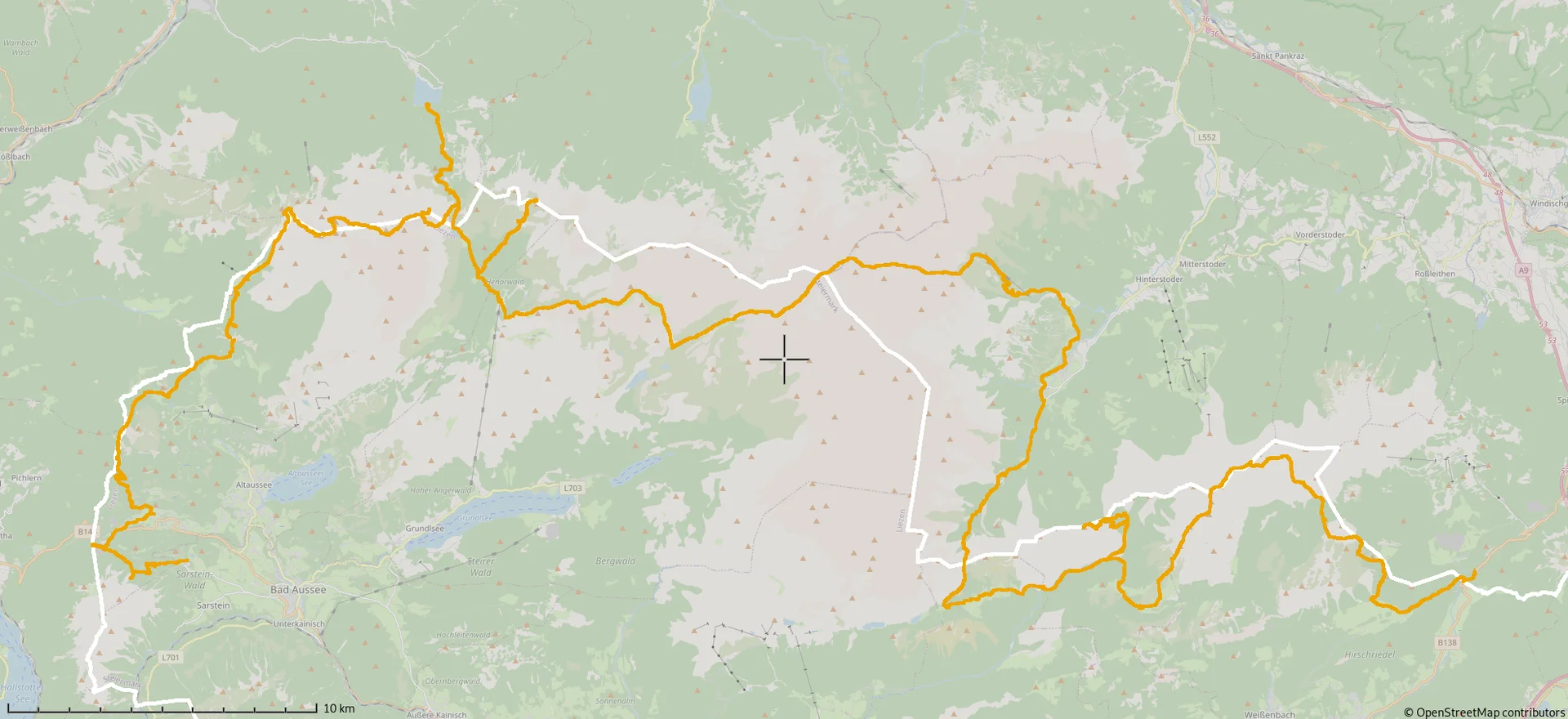
Am Kartenausschnitt oben kann man meinen Weg durchs Tote Gebirge ganz gut erkennen. Leider war es mir nicht immer möglich, genau der Grenze zu folgen. Vor allem den Abschnitt über den Stoderkamm, vom Großen Tragl zum Feuerberg, habe ich diesmal ausgelassen, da noch zu viel Schnee lag und ich alleine unterwegs war. Diese Etappe möchte ich aber auf jeden Fall noch nachholen!
Steiermarkumwanderung - Etappe 9
Nach zwei Tagen Pause geht es weiter: ein einsamer Tag über die Gipfel rund um den Rinnerkogel zur Ischler Hütte – und ein Tag, der mit neugierigen Kühen beginnt und im Gewitter am Sommersbergsee endet.
Tag 29 (2020-06-30)
Stationen: Rinnerhütte → Rinnerkogel (Augstkogel) (2012 m) → Wehrkogel (2008 m) → Großer Wildenkogel (2093 m) → Schönberg (Wildenkogel) (2090 m) → Ischler Hütte
Höchster Punkt: Schönberg (Wildenkogel), 2089 m
Länge: 13,9 km
Steiermarkumwanderung - Etappe 8
Nach fast sieben Jahren geht es weiter: über fünf Zweitausender zur Hochmölbinghütte, mit einem Umweg über Hinterstoder zum Prielschutzhaus, über das verschneite Plateau des Toten Gebirges zum Albert Appel-Haus und zur Rinnerhütte – und danach zwei Tage Pause.
Tag 25 (2020-06-24)
Stationen: Pyhrn → Geißfeld (1727 m) → Lärchkogel (1788 m) → Elmscharte → Schrocken (2281 m) → Kaminspitz (2322 m) → Kreuzspitze (2327 m) → Hochmölbing (2336 m) → Mittermölbing (2318 m) → Kleinmölbing (2160 m) → Hochmölbinghütte
Höchster Punkt: Hochmölbing, 2332 m
Länge: 25,3 km
Weiter gehts
Später als gedacht (zuerst bin ich von der Arbeit nicht weggekommen und jetzt waren doch mehrere Tage Planung notwendig) werde ich jetzt wieder aufbrechen.
Der Rucksack ist gepackt und morgen werde ich um 5h früh den Zug nach Liezen nehmen und dann weiter mit dem Bus auf den Pyrn. Aber genug von meinen Plänen. Ich will jetzt einmal kurz über das bereits geschaffte schreiben.
Bilanz nach 24 Gehtagen
Bis jetzt hatte ich insgesamt 24 Gehtage an der steirischen Grenze.
Sieben Jahre nichts passiert?
Fast sieben Jahre hat sich hier nichts getan. Das heißt nicht, dass ich untätig war! Ich bin nach meiner letzten Vier-Tages-Etappe nur abgekommen von meinem Vorhaben, die Steiermark zu umrunden. Nicht dass ich es nicht mehr will, aber in meinem Leben haben sich die Prioritäten geändert.
Der erste fixe Job und ehe man sich versieht, hat man eine Pause von sieben Jahren gemacht. Das letzte Mal hatte ich mir im Jahr 2017 eine Woche Urlaub genommen, um weiterzugehen. Und dann war Regen angesagt. Sonst ist an meinem Vorhaben nichts weitergegangen.
Weg mit Bildern
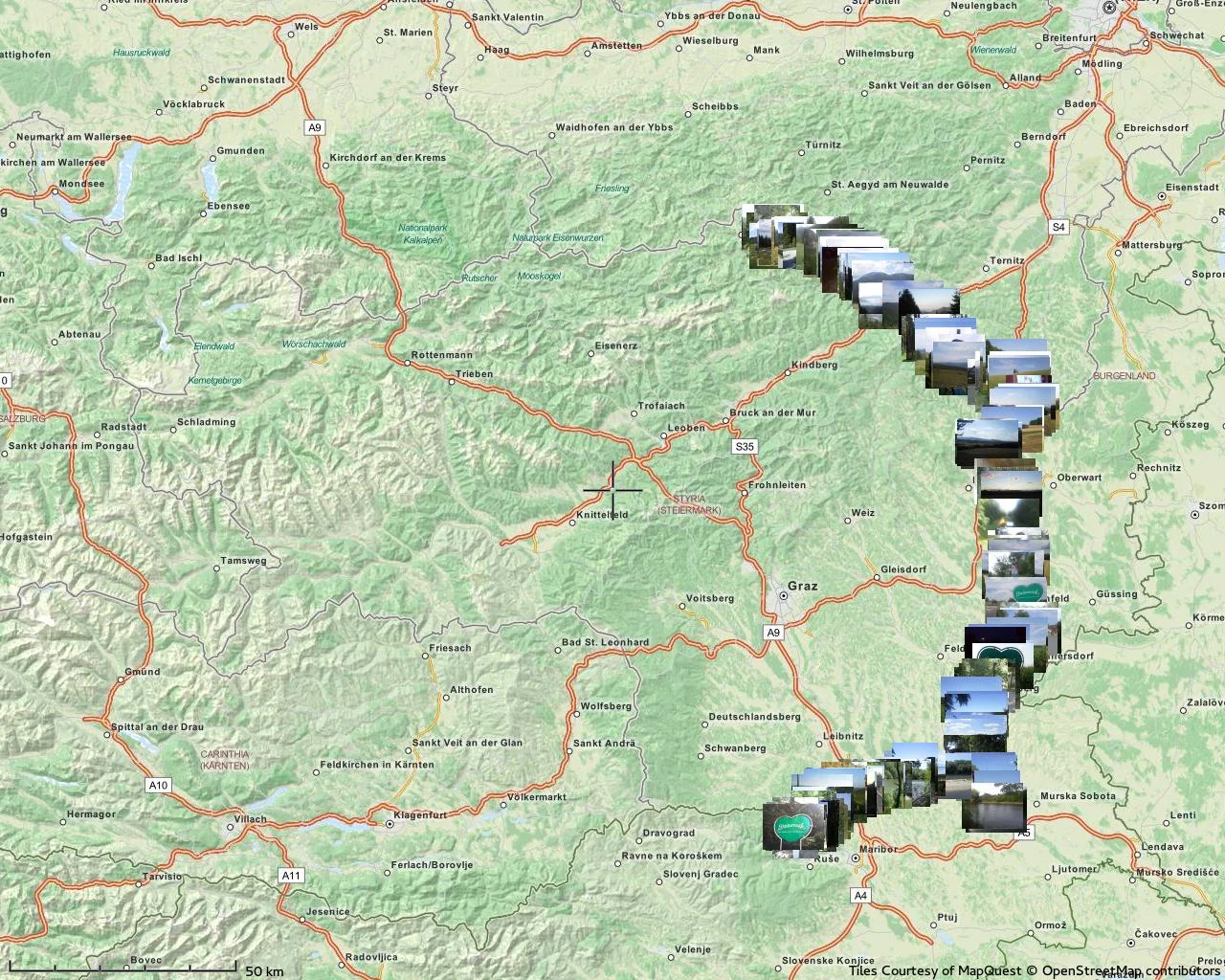
Eine kleine Visualisierung meines bisherigen Weges mit allen Fotos, die ich gemacht habe.
Tag: Podman
gorgeOS-Cloud
In the last post I walked through the base image that every one of my servers shares. This time I want to look at the first layer on top of it: the cloud image, which adds everything a virtual machine running in a hypervisor environment needs.
The full source is in my gorge.os repository.
Layered images
One of the things I really like about BootC is that you can layer images just like you layer application containers. The cloud image simply starts from the base:
How I tweak my bootc base image
In the last post I explained why I decided to switch to BootC for all my servers. This time I want to walk through what I actually put into my base image - the packages, the config files, and the custom services that make every host feel like home.
The full source is in my gorge.os repository.
The Containerfile structure
Before getting into what’s in the image, I want to explain how I put things into it. The Containerfile is split into three stages: package management, file placement, and service activation.
The motivation to use BootC
I have a fair amount of servers that I’m (co-)responsible for. To make my life easier I tried serveral managent tools to do the common tasks for all servers as smooth as possible.
The two tools I mainly use at the moment are ansible and cloud-init.
Cloud-init is a great tool to spin up a new server, or to resore an existing one.
ansible is great to do common tasks, like updating servers, installing packages to multiple hosts, but when it comes to thinks like adding a systemd-service to just a view hosts, it never felt natural to me.
Tag: Selfhosting
Using SSH Config `Match exec` to Route Hostnames Dynamically
Why bother with a fancy Match block?
When you SSH into a fleet of servers that share a naming scheme, you usually end up copying-pasting the same options over and over. A Match block that tests the host name and then tweaks the connection parameters lets you:
- Keep a single config file that works for every member of the group.
- Automate proxying or port-translation without having to write a wrapper script.
The example below demonstrates the trick.
Glusterfs down
This morning I woke up and the radio was not playing. I soon figured out, that my DNS, AdGuard, was for some reason down.
I started with the debugging, even before I had breakfast. Not evan a coffee!
The docker-container for AdGuard was running and reported no error. So I dug deeper and deeper, just to find out, that several containers showed strange behavior. For example did Traefik had som error that it could not find the middlewares, that where configured via environment variables.
Tag: Ssh
Using SSH Config `Match exec` to Route Hostnames Dynamically
Why bother with a fancy Match block?
When you SSH into a fleet of servers that share a naming scheme, you usually end up copying-pasting the same options over and over. A Match block that tests the host name and then tweaks the connection parameters lets you:
- Keep a single config file that works for every member of the group.
- Automate proxying or port-translation without having to write a wrapper script.
The example below demonstrates the trick.
Tag: Til
Using SSH Config `Match exec` to Route Hostnames Dynamically
Why bother with a fancy Match block?
When you SSH into a fleet of servers that share a naming scheme, you usually end up copying-pasting the same options over and over. A Match block that tests the host name and then tweaks the connection parameters lets you:
- Keep a single config file that works for every member of the group.
- Automate proxying or port-translation without having to write a wrapper script.
The example below demonstrates the trick.
Tag: Bug
Glusterfs down
This morning I woke up and the radio was not playing. I soon figured out, that my DNS, AdGuard, was for some reason down.
I started with the debugging, even before I had breakfast. Not evan a coffee!
The docker-container for AdGuard was running and reported no error. So I dug deeper and deeper, just to find out, that several containers showed strange behavior. For example did Traefik had som error that it could not find the middlewares, that where configured via environment variables.
Tag: Glusterfs
Glusterfs down
This morning I woke up and the radio was not playing. I soon figured out, that my DNS, AdGuard, was for some reason down.
I started with the debugging, even before I had breakfast. Not evan a coffee!
The docker-container for AdGuard was running and reported no error. So I dug deeper and deeper, just to find out, that several containers showed strange behavior. For example did Traefik had som error that it could not find the middlewares, that where configured via environment variables.
Tag: Server
Glusterfs down
This morning I woke up and the radio was not playing. I soon figured out, that my DNS, AdGuard, was for some reason down.
I started with the debugging, even before I had breakfast. Not evan a coffee!
The docker-container for AdGuard was running and reported no error. So I dug deeper and deeper, just to find out, that several containers showed strange behavior. For example did Traefik had som error that it could not find the middlewares, that where configured via environment variables.
Tag: Blog
Hello World!
M1CH mich /mɪç/ – In German “mich” is the accusative form of the first-person singular personal pronoun. (me; myself)
👋 A Quick Hello
I’m M1CH – the name you’ll find in the URL of this little corner of the web. I started this blog to share the things I’m excited about right now: bootable containers, Podman, Linux, open-source, privacy on the internet, Web 3.0 and all the decentralised ideas that are shaping the future.
Tag: Introduction
Hello World!
M1CH mich /mɪç/ – In German “mich” is the accusative form of the first-person singular personal pronoun. (me; myself)
👋 A Quick Hello
I’m M1CH – the name you’ll find in the URL of this little corner of the web. I started this blog to share the things I’m excited about right now: bootable containers, Podman, Linux, open-source, privacy on the internet, Web 3.0 and all the decentralised ideas that are shaping the future.
Tag: Alpen
Steiermarkumwanderung - Etappe 10
Tag 31 (2020-07-06) - Über den Sarstein
Stationen: Pötschenpass → Sarsteinalm → Hoher Sarstein (1975 m) → Sarsteinhütte → Obertraun
Höchster Punkt: Hoher Sarstein, 1968 m
Länge: 13,4 km
In vier Tagen Pause konnte ich mich gut erholen. Eva hat Verwandte in Oberösterreich, und da hat sie beschlossen, diese zu besuchen und mich am Weg abzusetzen.
In der Früh hat sie mich dann am Pötschenpass, zwischen Altaussee und Hallstätter See, abgesetzt. Die ersten 1,5 km waren mir noch wohlbekannt, bin ich sie doch erst fünf Tage zuvor gegangen, damals noch in der Hoffnung, dass ich es vor dem Gewitter auf den Sarstein schaffe.
Steiermarkumwanderung - Etappe 9
Nach zwei Tagen Pause geht es weiter: ein einsamer Tag über die Gipfel rund um den Rinnerkogel zur Ischler Hütte – und ein Tag, der mit neugierigen Kühen beginnt und im Gewitter am Sommersbergsee endet.
Tag 29 (2020-06-30)
Stationen: Rinnerhütte → Rinnerkogel (Augstkogel) (2012 m) → Wehrkogel (2008 m) → Großer Wildenkogel (2093 m) → Schönberg (Wildenkogel) (2090 m) → Ischler Hütte
Höchster Punkt: Schönberg (Wildenkogel), 2089 m
Länge: 13,9 km
Steiermarkumwanderung - Etappe 8
Nach fast sieben Jahren geht es weiter: über fünf Zweitausender zur Hochmölbinghütte, mit einem Umweg über Hinterstoder zum Prielschutzhaus, über das verschneite Plateau des Toten Gebirges zum Albert Appel-Haus und zur Rinnerhütte – und danach zwei Tage Pause.
Tag 25 (2020-06-24)
Stationen: Pyhrn → Geißfeld (1727 m) → Lärchkogel (1788 m) → Elmscharte → Schrocken (2281 m) → Kaminspitz (2322 m) → Kreuzspitze (2327 m) → Hochmölbing (2336 m) → Mittermölbing (2318 m) → Kleinmölbing (2160 m) → Hochmölbinghütte
Höchster Punkt: Hochmölbing, 2332 m
Länge: 25,3 km
Schladminger Tauern Überschreitung
Der erste Wandertag seit langem
Nicht die erste Wanderung seit langem. Noch nicht einmal die erste Mehrtageswanderung heuer. Nein, die erste Wanderung, die es wieder in meinen Blog schafft. 😃
Link zur Tour
Tag 1
Heute sind wir um 6h in Graz weggefahren, um ja den Wanderbus ins Untertal zu erwischen.
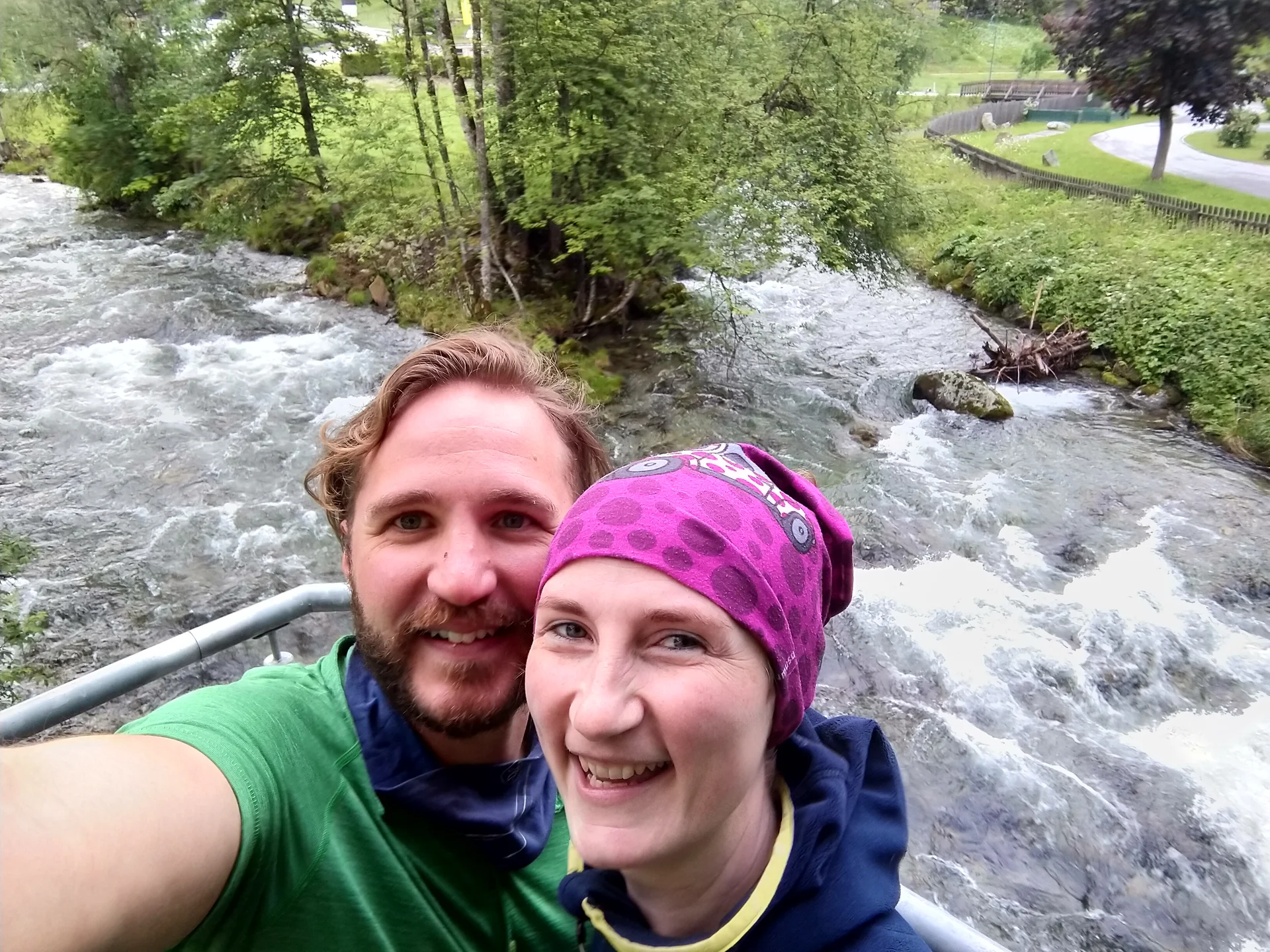
Gestartet sind wir heut vom Parkplatz Riesachfall, mit dem Ziel Preintalerhütte. Trotz der Bilder von der Hängebrücke im durch die Höll Steig hat sich Eva getraut und nicht die Almstraße genommen. Und es hat sich gelohnt😁
Tag: Dachstein
Steiermarkumwanderung - Etappe 10
Tag 31 (2020-07-06) - Über den Sarstein
Stationen: Pötschenpass → Sarsteinalm → Hoher Sarstein (1975 m) → Sarsteinhütte → Obertraun
Höchster Punkt: Hoher Sarstein, 1968 m
Länge: 13,4 km
In vier Tagen Pause konnte ich mich gut erholen. Eva hat Verwandte in Oberösterreich, und da hat sie beschlossen, diese zu besuchen und mich am Weg abzusetzen.
In der Früh hat sie mich dann am Pötschenpass, zwischen Altaussee und Hallstätter See, abgesetzt. Die ersten 1,5 km waren mir noch wohlbekannt, bin ich sie doch erst fünf Tage zuvor gegangen, damals noch in der Hoffnung, dass ich es vor dem Gewitter auf den Sarstein schaffe.
Tag: Hiking
Steiermarkumwanderung - Etappe 10
Tag 31 (2020-07-06) - Über den Sarstein
Stationen: Pötschenpass → Sarsteinalm → Hoher Sarstein (1975 m) → Sarsteinhütte → Obertraun
Höchster Punkt: Hoher Sarstein, 1968 m
Länge: 13,4 km
In vier Tagen Pause konnte ich mich gut erholen. Eva hat Verwandte in Oberösterreich, und da hat sie beschlossen, diese zu besuchen und mich am Weg abzusetzen.
In der Früh hat sie mich dann am Pötschenpass, zwischen Altaussee und Hallstätter See, abgesetzt. Die ersten 1,5 km waren mir noch wohlbekannt, bin ich sie doch erst fünf Tage zuvor gegangen, damals noch in der Hoffnung, dass ich es vor dem Gewitter auf den Sarstein schaffe.
231.336 Schritte - Statistik durchs Tote Gebirge
Nachdem ich das Tote Gebirge durchquert hatte, die Wettervorhersage alles andere als gut war und auch mein Körper eine Pause vertragen konnte, bin ich kurzerhand nach Hause gefahren und habe mich ein paar Tage lang entspannt.
Am Kartenausschnitt oben kann man meinen Weg durchs Tote Gebirge ganz gut erkennen. Leider war es mir nicht immer möglich, genau der Grenze zu folgen. Vor allem den Abschnitt über den Stoderkamm, vom Großen Tragl zum Feuerberg, habe ich diesmal ausgelassen, da noch zu viel Schnee lag und ich alleine unterwegs war. Diese Etappe möchte ich aber auf jeden Fall noch nachholen!
Steiermarkumwanderung - Etappe 9
Nach zwei Tagen Pause geht es weiter: ein einsamer Tag über die Gipfel rund um den Rinnerkogel zur Ischler Hütte – und ein Tag, der mit neugierigen Kühen beginnt und im Gewitter am Sommersbergsee endet.
Tag 29 (2020-06-30)
Stationen: Rinnerhütte → Rinnerkogel (Augstkogel) (2012 m) → Wehrkogel (2008 m) → Großer Wildenkogel (2093 m) → Schönberg (Wildenkogel) (2090 m) → Ischler Hütte
Höchster Punkt: Schönberg (Wildenkogel), 2089 m
Länge: 13,9 km
Steiermarkumwanderung - Etappe 8
Nach fast sieben Jahren geht es weiter: über fünf Zweitausender zur Hochmölbinghütte, mit einem Umweg über Hinterstoder zum Prielschutzhaus, über das verschneite Plateau des Toten Gebirges zum Albert Appel-Haus und zur Rinnerhütte – und danach zwei Tage Pause.
Tag 25 (2020-06-24)
Stationen: Pyhrn → Geißfeld (1727 m) → Lärchkogel (1788 m) → Elmscharte → Schrocken (2281 m) → Kaminspitz (2322 m) → Kreuzspitze (2327 m) → Hochmölbing (2336 m) → Mittermölbing (2318 m) → Kleinmölbing (2160 m) → Hochmölbinghütte
Höchster Punkt: Hochmölbing, 2332 m
Länge: 25,3 km
Weiter gehts
Später als gedacht (zuerst bin ich von der Arbeit nicht weggekommen und jetzt waren doch mehrere Tage Planung notwendig) werde ich jetzt wieder aufbrechen.
Der Rucksack ist gepackt und morgen werde ich um 5h früh den Zug nach Liezen nehmen und dann weiter mit dem Bus auf den Pyrn. Aber genug von meinen Plänen. Ich will jetzt einmal kurz über das bereits geschaffte schreiben.
Bilanz nach 24 Gehtagen
Bis jetzt hatte ich insgesamt 24 Gehtage an der steirischen Grenze.
Sieben Jahre nichts passiert?
Fast sieben Jahre hat sich hier nichts getan. Das heißt nicht, dass ich untätig war! Ich bin nach meiner letzten Vier-Tages-Etappe nur abgekommen von meinem Vorhaben, die Steiermark zu umrunden. Nicht dass ich es nicht mehr will, aber in meinem Leben haben sich die Prioritäten geändert.
Der erste fixe Job und ehe man sich versieht, hat man eine Pause von sieben Jahren gemacht. Das letzte Mal hatte ich mir im Jahr 2017 eine Woche Urlaub genommen, um weiterzugehen. Und dann war Regen angesagt. Sonst ist an meinem Vorhaben nichts weitergegangen.
Weg mit Bildern
Eine kleine Visualisierung meines bisherigen Weges mit allen Fotos, die ich gemacht habe.
Tag: Steiermarkumwanderung
Steiermarkumwanderung - Etappe 10
Tag 31 (2020-07-06) - Über den Sarstein
Stationen: Pötschenpass → Sarsteinalm → Hoher Sarstein (1975 m) → Sarsteinhütte → Obertraun
Höchster Punkt: Hoher Sarstein, 1968 m
Länge: 13,4 km
In vier Tagen Pause konnte ich mich gut erholen. Eva hat Verwandte in Oberösterreich, und da hat sie beschlossen, diese zu besuchen und mich am Weg abzusetzen.
In der Früh hat sie mich dann am Pötschenpass, zwischen Altaussee und Hallstätter See, abgesetzt. Die ersten 1,5 km waren mir noch wohlbekannt, bin ich sie doch erst fünf Tage zuvor gegangen, damals noch in der Hoffnung, dass ich es vor dem Gewitter auf den Sarstein schaffe.
231.336 Schritte - Statistik durchs Tote Gebirge
Nachdem ich das Tote Gebirge durchquert hatte, die Wettervorhersage alles andere als gut war und auch mein Körper eine Pause vertragen konnte, bin ich kurzerhand nach Hause gefahren und habe mich ein paar Tage lang entspannt.
Am Kartenausschnitt oben kann man meinen Weg durchs Tote Gebirge ganz gut erkennen. Leider war es mir nicht immer möglich, genau der Grenze zu folgen. Vor allem den Abschnitt über den Stoderkamm, vom Großen Tragl zum Feuerberg, habe ich diesmal ausgelassen, da noch zu viel Schnee lag und ich alleine unterwegs war. Diese Etappe möchte ich aber auf jeden Fall noch nachholen!
Steiermarkumwanderung - Etappe 9
Nach zwei Tagen Pause geht es weiter: ein einsamer Tag über die Gipfel rund um den Rinnerkogel zur Ischler Hütte – und ein Tag, der mit neugierigen Kühen beginnt und im Gewitter am Sommersbergsee endet.
Tag 29 (2020-06-30)
Stationen: Rinnerhütte → Rinnerkogel (Augstkogel) (2012 m) → Wehrkogel (2008 m) → Großer Wildenkogel (2093 m) → Schönberg (Wildenkogel) (2090 m) → Ischler Hütte
Höchster Punkt: Schönberg (Wildenkogel), 2089 m
Länge: 13,9 km
Steiermarkumwanderung - Etappe 8
Nach fast sieben Jahren geht es weiter: über fünf Zweitausender zur Hochmölbinghütte, mit einem Umweg über Hinterstoder zum Prielschutzhaus, über das verschneite Plateau des Toten Gebirges zum Albert Appel-Haus und zur Rinnerhütte – und danach zwei Tage Pause.
Tag 25 (2020-06-24)
Stationen: Pyhrn → Geißfeld (1727 m) → Lärchkogel (1788 m) → Elmscharte → Schrocken (2281 m) → Kaminspitz (2322 m) → Kreuzspitze (2327 m) → Hochmölbing (2336 m) → Mittermölbing (2318 m) → Kleinmölbing (2160 m) → Hochmölbinghütte
Höchster Punkt: Hochmölbing, 2332 m
Länge: 25,3 km
Weiter gehts
Später als gedacht (zuerst bin ich von der Arbeit nicht weggekommen und jetzt waren doch mehrere Tage Planung notwendig) werde ich jetzt wieder aufbrechen.
Der Rucksack ist gepackt und morgen werde ich um 5h früh den Zug nach Liezen nehmen und dann weiter mit dem Bus auf den Pyrn. Aber genug von meinen Plänen. Ich will jetzt einmal kurz über das bereits geschaffte schreiben.
Bilanz nach 24 Gehtagen
Bis jetzt hatte ich insgesamt 24 Gehtage an der steirischen Grenze.
Sieben Jahre nichts passiert?
Fast sieben Jahre hat sich hier nichts getan. Das heißt nicht, dass ich untätig war! Ich bin nach meiner letzten Vier-Tages-Etappe nur abgekommen von meinem Vorhaben, die Steiermark zu umrunden. Nicht dass ich es nicht mehr will, aber in meinem Leben haben sich die Prioritäten geändert.
Der erste fixe Job und ehe man sich versieht, hat man eine Pause von sieben Jahren gemacht. Das letzte Mal hatte ich mir im Jahr 2017 eine Woche Urlaub genommen, um weiterzugehen. Und dann war Regen angesagt. Sonst ist an meinem Vorhaben nichts weitergegangen.
Weg mit Bildern
Eine kleine Visualisierung meines bisherigen Weges mit allen Fotos, die ich gemacht habe.
Steiermarkumwanderung
Der Rucksack ist gepackt
Rucksack ist gepackt; GPS ist programmiert. Jetzt muss ich nur noch eine Möglichkeit finden, um an den Start zu kommen.
Starten werde ich an der südlichsten Stelle der Steiermark in Schloßberg und dann werde ich gegen den Uhrzeigersinn gehen. Als Startpunkt habe ich diese Stelle und Richtung gewählt, damit ich den “langweiligsten” Teil gleich am Anfang hinter mich bringe.
Zum Projekt
Der Einfall, die Steiermark zu Fuß zu umrunden, ist mir schon vor vielen Jahren gekommen. Irgendwann habe ich es dann davon zu erzählen begonnen und, um es für mich selbst konkret zu machen, habe ich es, als ein Ende meines Studiums in Sicht war, mit diesem zu verknüpfen begonnen. “Wenn ich meinen Abschluss habe, gehe ich einmal zu Fuß um die Steiermark.”
Tag: Wandern
Steiermarkumwanderung - Etappe 10
Tag 31 (2020-07-06) - Über den Sarstein
Stationen: Pötschenpass → Sarsteinalm → Hoher Sarstein (1975 m) → Sarsteinhütte → Obertraun
Höchster Punkt: Hoher Sarstein, 1968 m
Länge: 13,4 km
In vier Tagen Pause konnte ich mich gut erholen. Eva hat Verwandte in Oberösterreich, und da hat sie beschlossen, diese zu besuchen und mich am Weg abzusetzen.
In der Früh hat sie mich dann am Pötschenpass, zwischen Altaussee und Hallstätter See, abgesetzt. Die ersten 1,5 km waren mir noch wohlbekannt, bin ich sie doch erst fünf Tage zuvor gegangen, damals noch in der Hoffnung, dass ich es vor dem Gewitter auf den Sarstein schaffe.
Steiermarkumwanderung - Etappe 9
Nach zwei Tagen Pause geht es weiter: ein einsamer Tag über die Gipfel rund um den Rinnerkogel zur Ischler Hütte – und ein Tag, der mit neugierigen Kühen beginnt und im Gewitter am Sommersbergsee endet.
Tag 29 (2020-06-30)
Stationen: Rinnerhütte → Rinnerkogel (Augstkogel) (2012 m) → Wehrkogel (2008 m) → Großer Wildenkogel (2093 m) → Schönberg (Wildenkogel) (2090 m) → Ischler Hütte
Höchster Punkt: Schönberg (Wildenkogel), 2089 m
Länge: 13,9 km
Steiermarkumwanderung - Etappe 8
Nach fast sieben Jahren geht es weiter: über fünf Zweitausender zur Hochmölbinghütte, mit einem Umweg über Hinterstoder zum Prielschutzhaus, über das verschneite Plateau des Toten Gebirges zum Albert Appel-Haus und zur Rinnerhütte – und danach zwei Tage Pause.
Tag 25 (2020-06-24)
Stationen: Pyhrn → Geißfeld (1727 m) → Lärchkogel (1788 m) → Elmscharte → Schrocken (2281 m) → Kaminspitz (2322 m) → Kreuzspitze (2327 m) → Hochmölbing (2336 m) → Mittermölbing (2318 m) → Kleinmölbing (2160 m) → Hochmölbinghütte
Höchster Punkt: Hochmölbing, 2332 m
Länge: 25,3 km
Schladminger Tauern Überschreitung
Der erste Wandertag seit langem
Nicht die erste Wanderung seit langem. Noch nicht einmal die erste Mehrtageswanderung heuer. Nein, die erste Wanderung, die es wieder in meinen Blog schafft. 😃
Link zur Tour
Tag 1
Heute sind wir um 6h in Graz weggefahren, um ja den Wanderbus ins Untertal zu erwischen.
Gestartet sind wir heut vom Parkplatz Riesachfall, mit dem Ziel Preintalerhütte. Trotz der Bilder von der Hängebrücke im durch die Höll Steig hat sich Eva getraut und nicht die Almstraße genommen. Und es hat sich gelohnt😁
Tag: Totes Gebirge
231.336 Schritte - Statistik durchs Tote Gebirge
Nachdem ich das Tote Gebirge durchquert hatte, die Wettervorhersage alles andere als gut war und auch mein Körper eine Pause vertragen konnte, bin ich kurzerhand nach Hause gefahren und habe mich ein paar Tage lang entspannt.
Am Kartenausschnitt oben kann man meinen Weg durchs Tote Gebirge ganz gut erkennen. Leider war es mir nicht immer möglich, genau der Grenze zu folgen. Vor allem den Abschnitt über den Stoderkamm, vom Großen Tragl zum Feuerberg, habe ich diesmal ausgelassen, da noch zu viel Schnee lag und ich alleine unterwegs war. Diese Etappe möchte ich aber auf jeden Fall noch nachholen!
Steiermarkumwanderung - Etappe 9
Nach zwei Tagen Pause geht es weiter: ein einsamer Tag über die Gipfel rund um den Rinnerkogel zur Ischler Hütte – und ein Tag, der mit neugierigen Kühen beginnt und im Gewitter am Sommersbergsee endet.
Tag 29 (2020-06-30)
Stationen: Rinnerhütte → Rinnerkogel (Augstkogel) (2012 m) → Wehrkogel (2008 m) → Großer Wildenkogel (2093 m) → Schönberg (Wildenkogel) (2090 m) → Ischler Hütte
Höchster Punkt: Schönberg (Wildenkogel), 2089 m
Länge: 13,9 km
Steiermarkumwanderung - Etappe 8
Nach fast sieben Jahren geht es weiter: über fünf Zweitausender zur Hochmölbinghütte, mit einem Umweg über Hinterstoder zum Prielschutzhaus, über das verschneite Plateau des Toten Gebirges zum Albert Appel-Haus und zur Rinnerhütte – und danach zwei Tage Pause.
Tag 25 (2020-06-24)
Stationen: Pyhrn → Geißfeld (1727 m) → Lärchkogel (1788 m) → Elmscharte → Schrocken (2281 m) → Kaminspitz (2322 m) → Kreuzspitze (2327 m) → Hochmölbing (2336 m) → Mittermölbing (2318 m) → Kleinmölbing (2160 m) → Hochmölbinghütte
Höchster Punkt: Hochmölbing, 2332 m
Länge: 25,3 km
Tag: Steiermark
Schladminger Tauern Überschreitung
Der erste Wandertag seit langem
Nicht die erste Wanderung seit langem. Noch nicht einmal die erste Mehrtageswanderung heuer. Nein, die erste Wanderung, die es wieder in meinen Blog schafft. 😃
Link zur Tour
Tag 1
Heute sind wir um 6h in Graz weggefahren, um ja den Wanderbus ins Untertal zu erwischen.
Gestartet sind wir heut vom Parkplatz Riesachfall, mit dem Ziel Preintalerhütte. Trotz der Bilder von der Hängebrücke im durch die Höll Steig hat sich Eva getraut und nicht die Almstraße genommen. Und es hat sich gelohnt😁
Tag: Tauern
Schladminger Tauern Überschreitung
Der erste Wandertag seit langem
Nicht die erste Wanderung seit langem. Noch nicht einmal die erste Mehrtageswanderung heuer. Nein, die erste Wanderung, die es wieder in meinen Blog schafft. 😃
Link zur Tour
Tag 1
Heute sind wir um 6h in Graz weggefahren, um ja den Wanderbus ins Untertal zu erwischen.
Gestartet sind wir heut vom Parkplatz Riesachfall, mit dem Ziel Preintalerhütte. Trotz der Bilder von der Hängebrücke im durch die Höll Steig hat sich Eva getraut und nicht die Almstraße genommen. Und es hat sich gelohnt😁